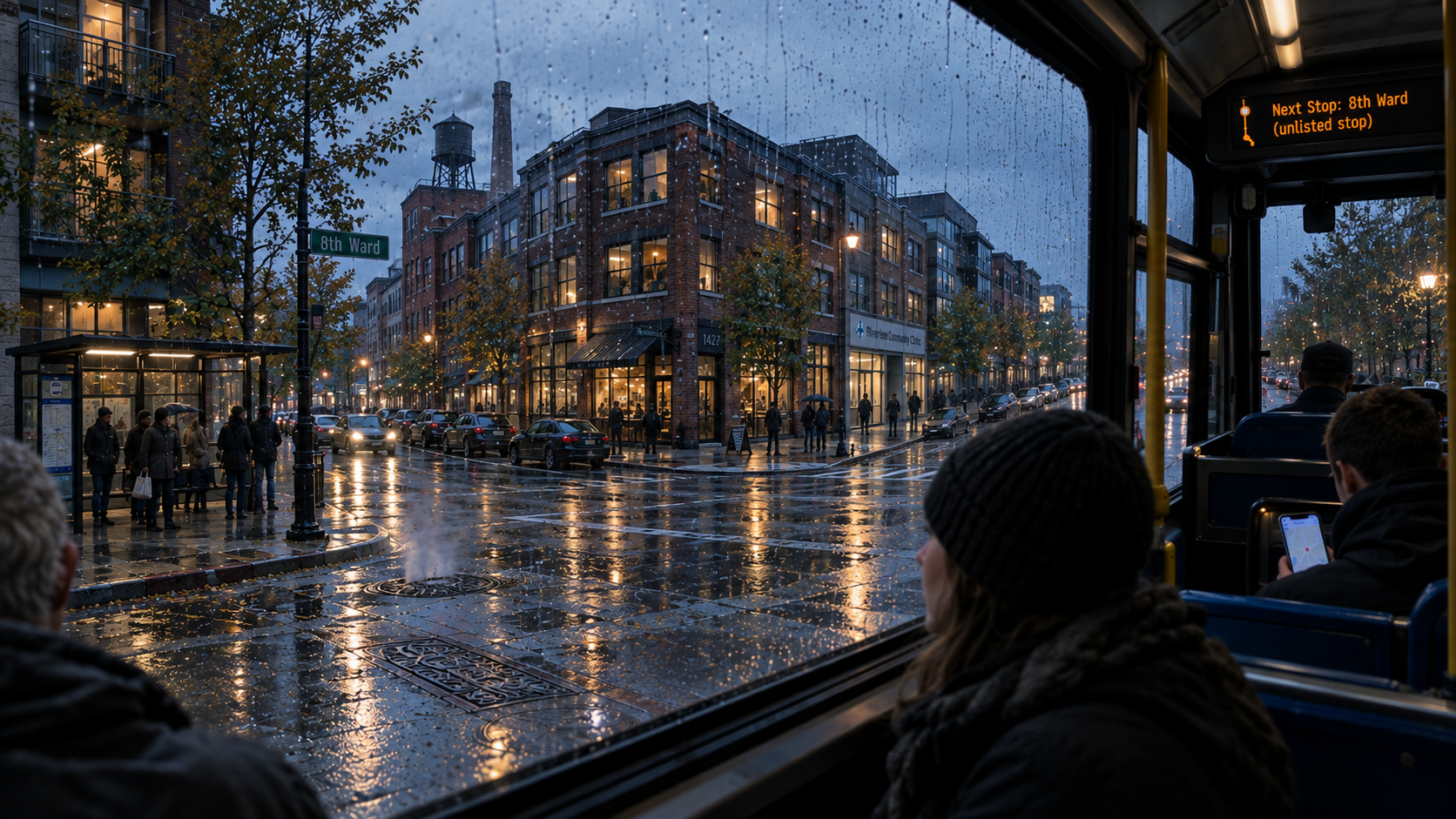
Meridian Exchange
A public market and transit interchange combining transport, commerce, civic services and residential life beneath one defining municipal clock.
Explore Meridian Exchange- Transit
- Market
- Civic
- Residential
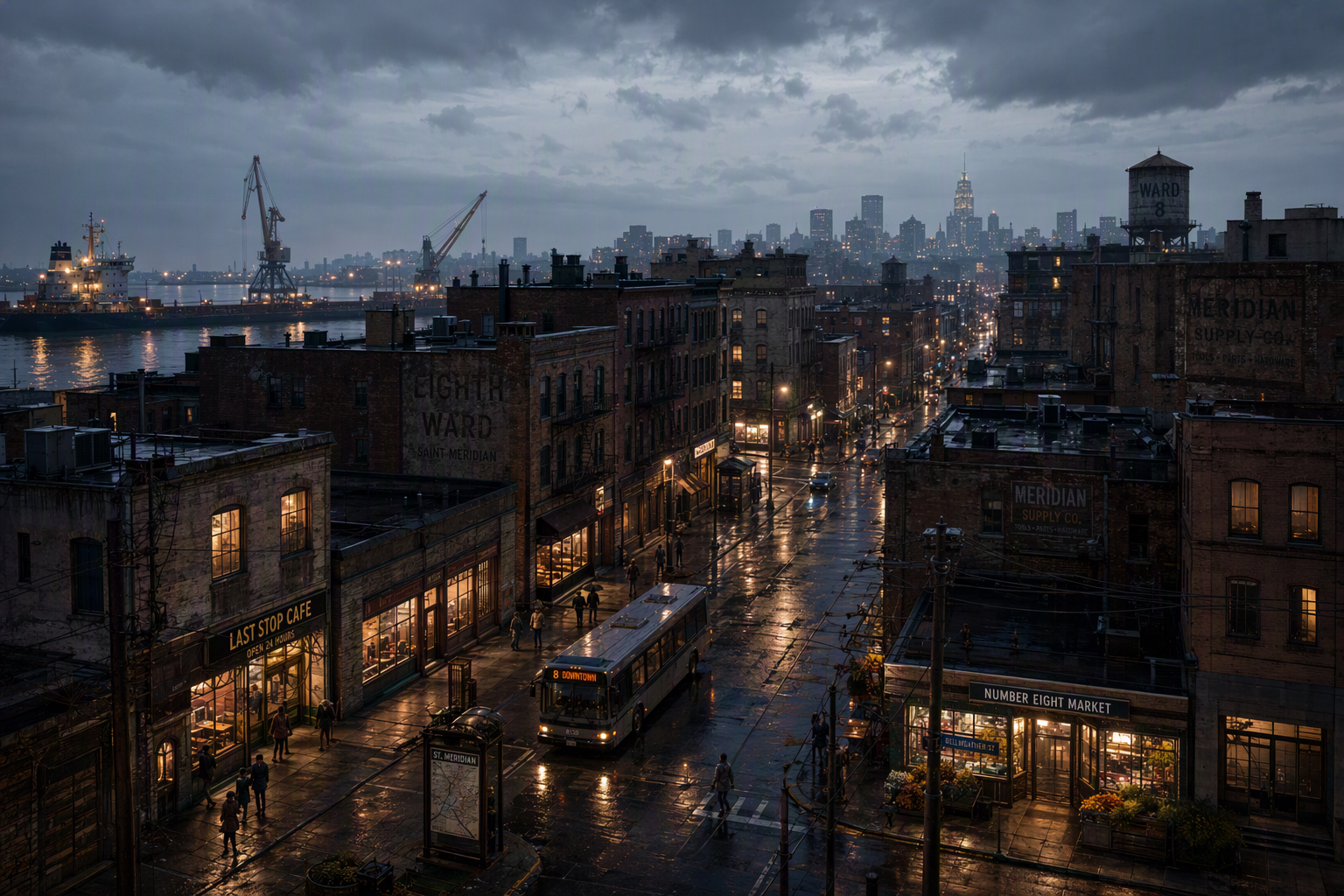
Between Saint Morrow’s working harbour and its converted warehouses, the Eighth Ward stays awake.
Harbour crews finish as hospital workers begin. Repair shops open beside bakeries and laundries. Apartment windows remain lit above workshops, cafés, clinics, and family businesses.
The neighbourhood appears on no current map as the eighth of anything.
No one who lives there seems especially troubled by that.
From local character and working life to the homes, services, and gathering places that hold the Ward together.
A public market and transit interchange combining transport, commerce, civic services and residential life beneath one defining municipal clock.
Explore Meridian ExchangeMeet the neighbors whose work, loyalties, and disagreements shape the 8th Ward.
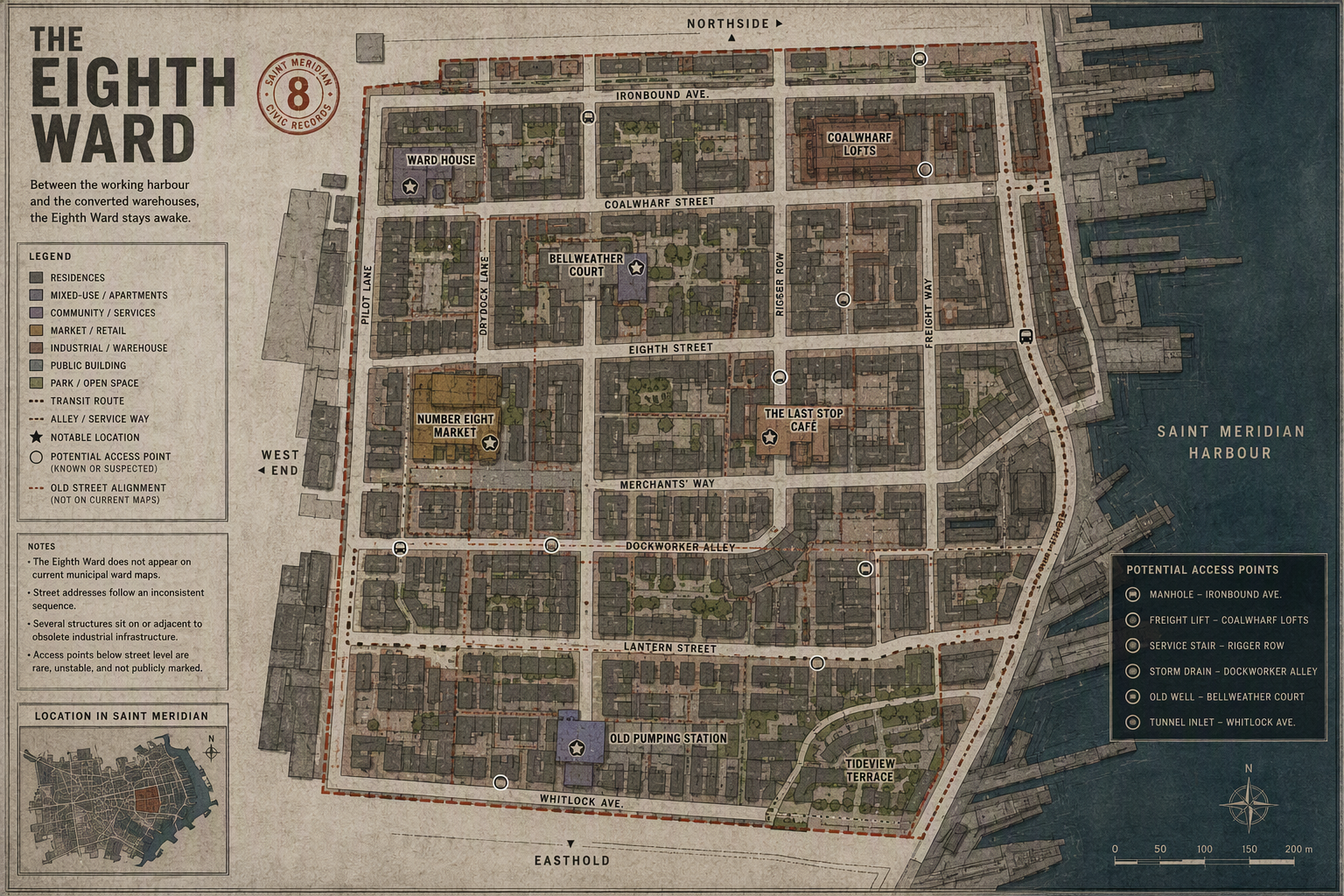
Northside runs along the top of the map, with Saint Morrow Harbour to the east. The stars mark familiar places: the Ward House, Bellweather Court, Number Eight Market, and the Last Stop Café.
The dotted route follows local transit. Open circles indicate potential access points, not public entrances; the red dashed lines trace older street alignments that do not appear on current maps. The Eighth itself does not appear on current municipal ward maps.

The Eighth Ward is not defined by a river, railway, or administrative line. It is defined by the addresses people recognize, the businesses they rely on, and the neighbours who notice when something changes.
Ask where the name came from and the answer depends on whom you ask. An electoral district. A fire-service division. A harbour designation. An old parish.
Municipal records offer a little support for each explanation and a complete answer for none of them.
The Eighth is home to harbour and utility workers, municipal employees, hospital and transit staff, students, apprentices, recent arrivals, and families who have known the same streets for generations.
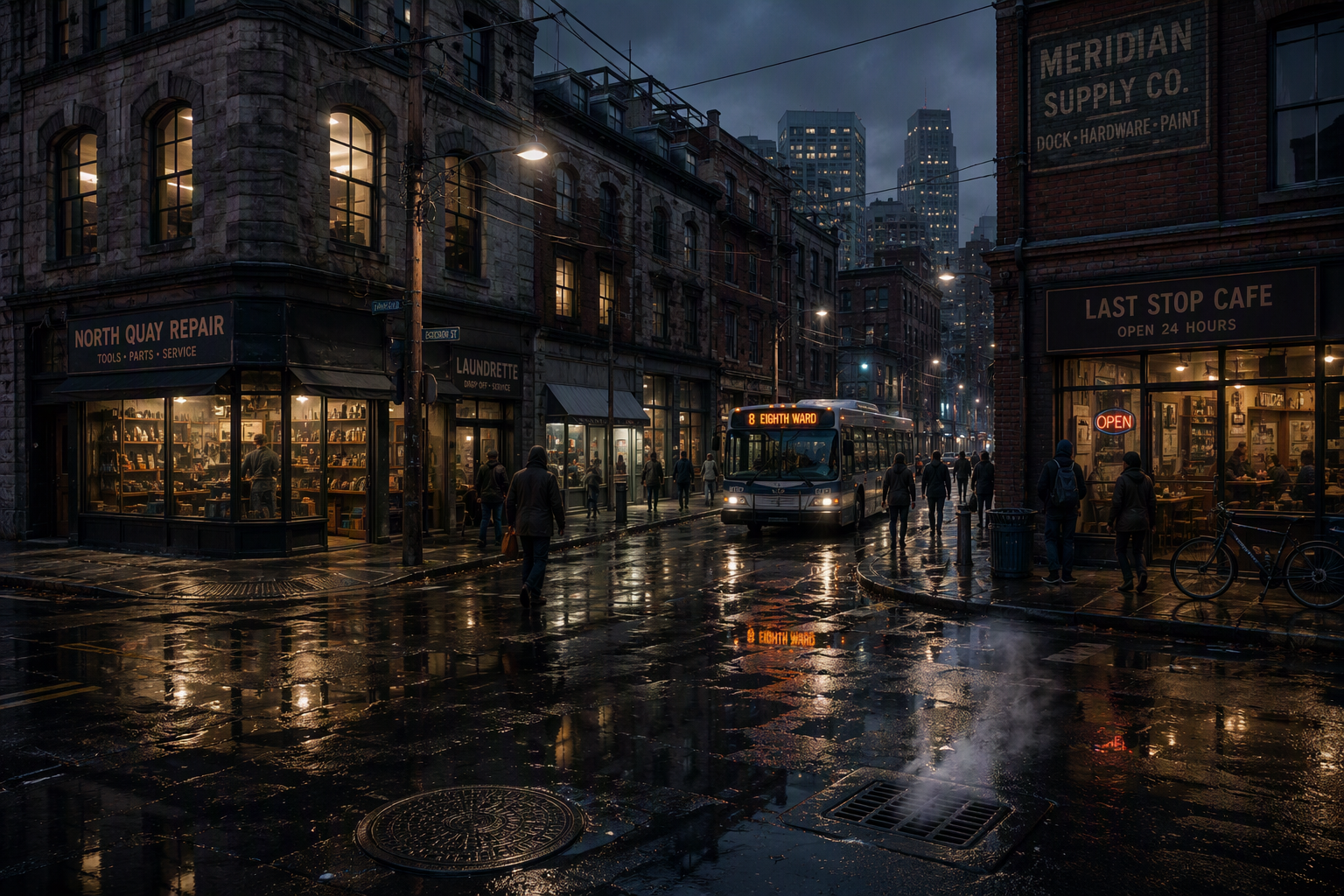
Its ground floors remain practical: repair shops, bakeries, laundries, small groceries, tool suppliers, community offices, restaurants, and businesses whose opening hours follow the shifts rather than the clock.
The neighbourhood is never entirely quiet.
A city written over itself. Narrow brick buildings stand beside postwar apartments, altered municipal structures, converted warehouses, and newer infill.
Bricked-over doors retain their numbers. Ceramic address plates survive beneath newer signs. Loading bays have become shops and homes. Courtyards connect buildings that appear separate from the street.
After prolonged rain, older numbers sometimes show beneath painted addresses.
Most residents consider this poor renovation work.
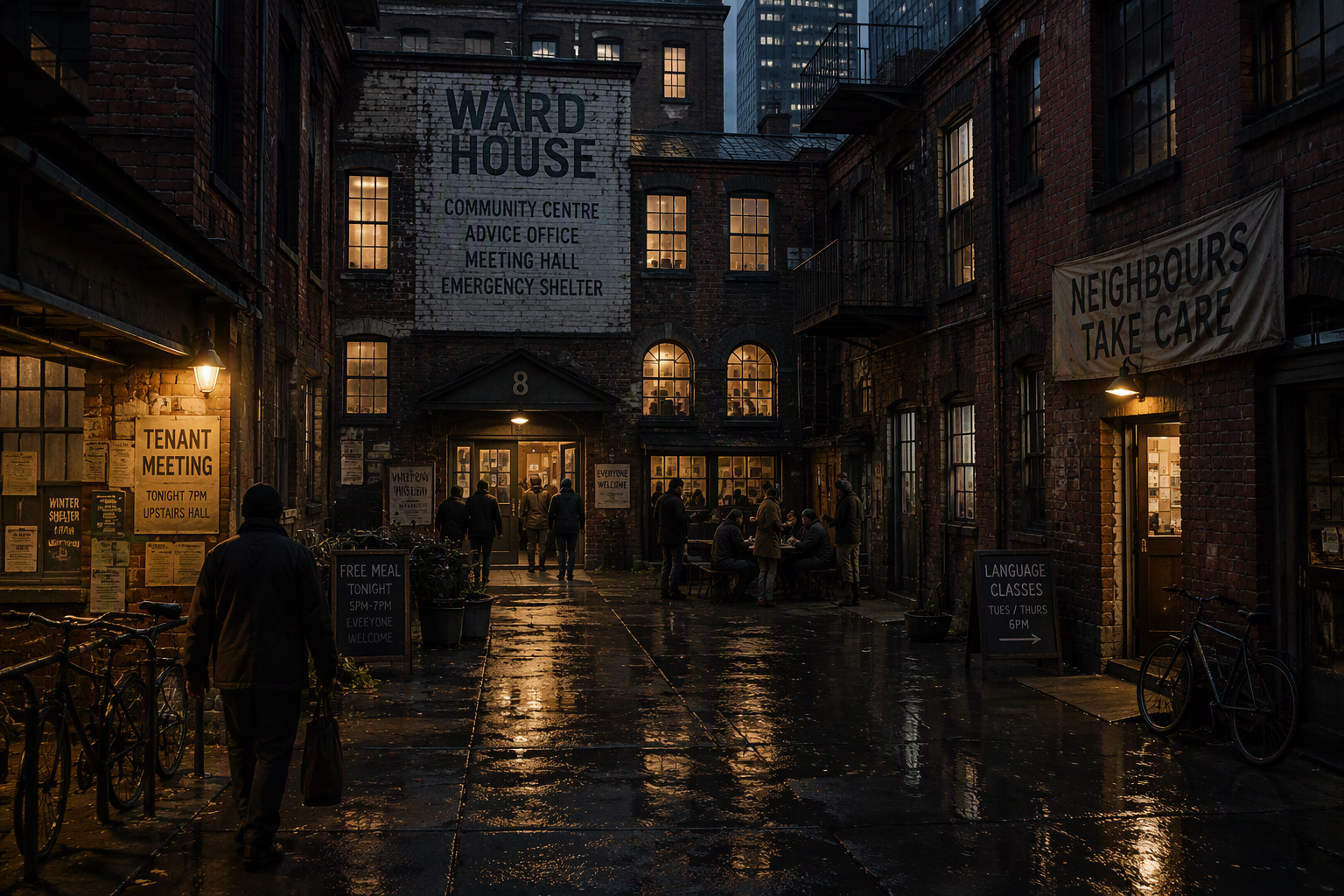
The Ward House is a community centre, advice office, meeting hall, and emergency warming shelter.
Its entrance plaque calls it a former municipal bathhouse. Other records describe a polling station, public laundry, fire-service annex, and neighbourhood records office.
Today it hosts tenant meetings, language classes, repair workshops, youth programmes, food distribution, and support during severe weather.
Mara Velez, its evening coordinator, keeps paper copies of important contacts and schedules.
She says municipal portals fail too often after software updates.
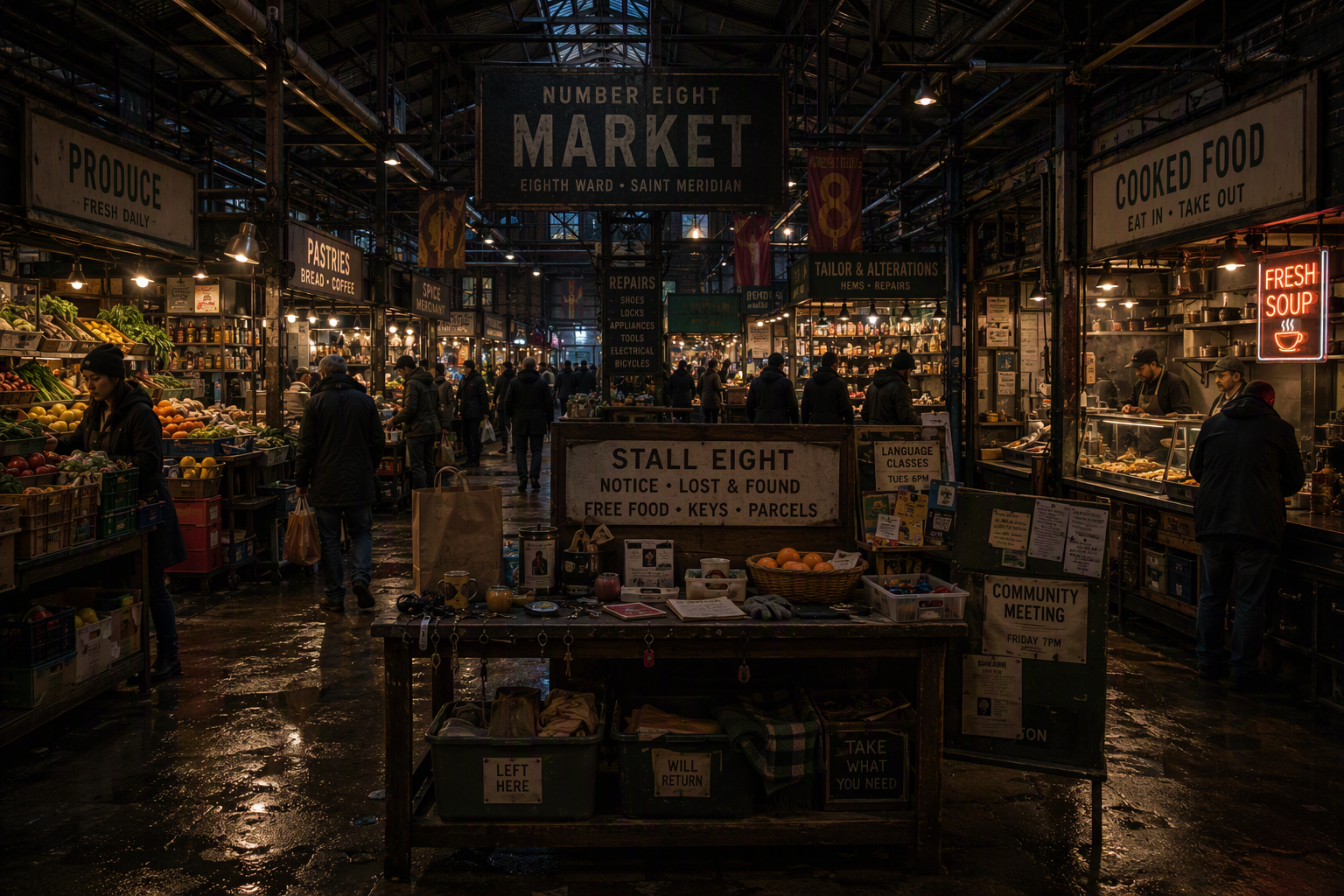
Number Eight Market changes with the working day.
Bread, produce, and coffee fill the morning. Repairs and household services occupy the afternoon. Cooked food and shift workers carry it into the night.
One space is known as Stall Eight, although the official plan shows only a circulation aisle.
Vendors use it for lost property, neighbourhood notices, spare keys, free food, and parcels delivered to incomplete addresses.
Nothing is formally sold there.
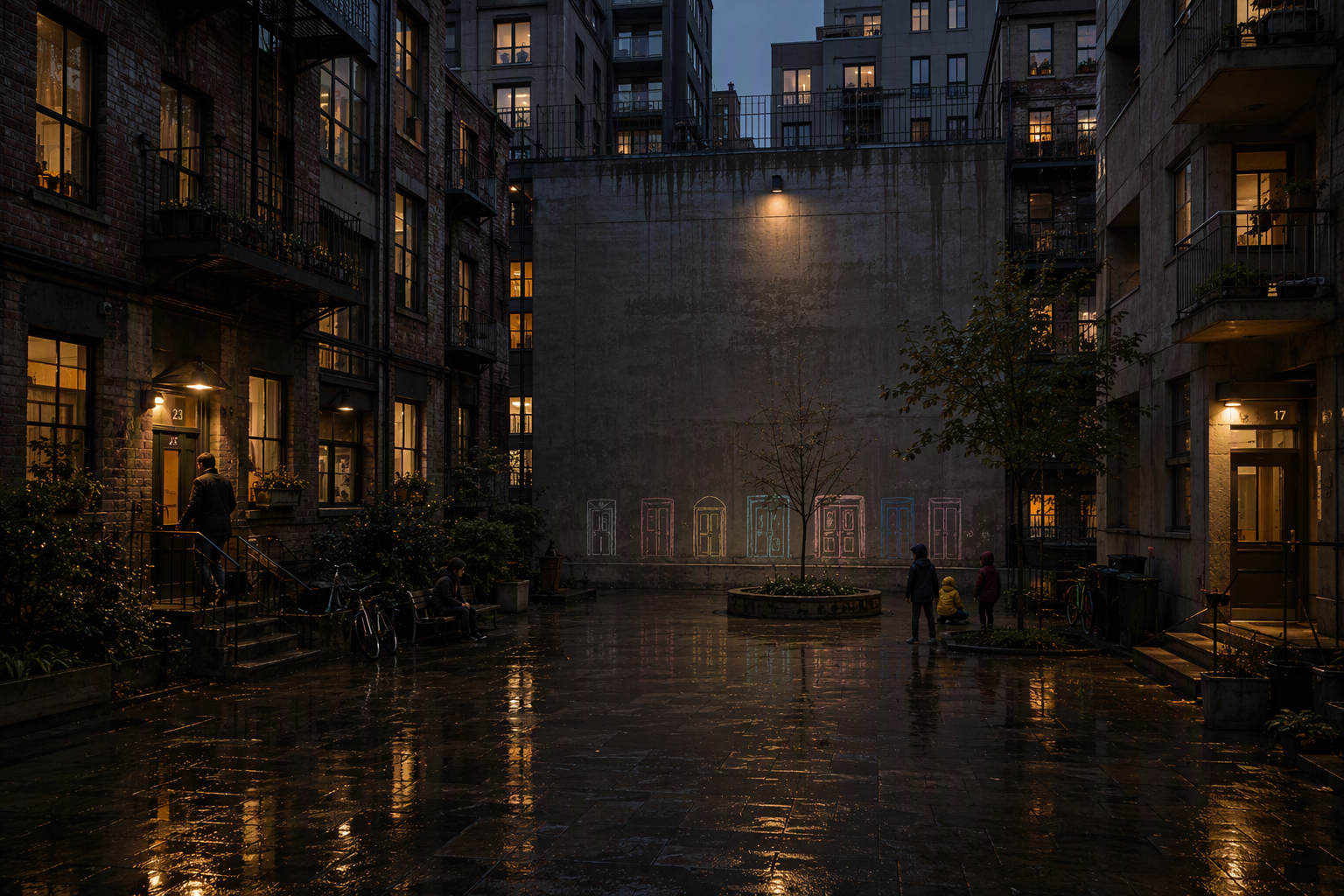
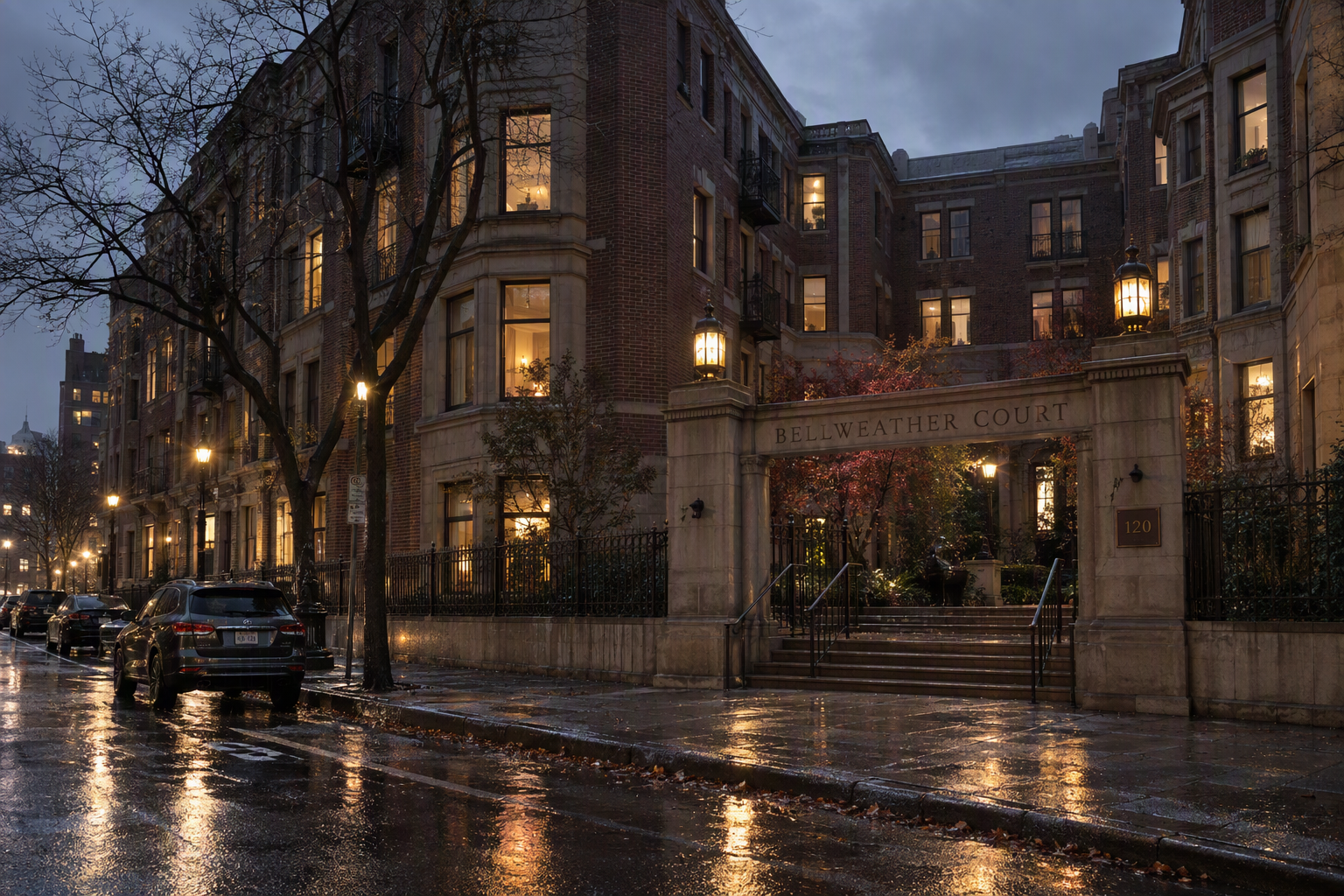
Bellweather Court is a mixed-income apartment courtyard created during an earlier housing-renewal programme.
Its central space feels unexpectedly broad compared with the buildings surrounding it. Architects usually attribute this to irregular property boundaries and incomplete historical plans.
Children draw chalk doors on its blank eastern wall.
After rain, one sometimes remains longer than the others.
The Last Stop Café is open twenty-four hours a day.
Transit staff, hospital workers, cleaners, students, harbour crews, and sleepless residents gather beneath its warm lights.
Its receipt printer occasionally assigns orders to a table number that is not displayed in the café.
The staff call the customer’s name instead.
The Ward has accumulated habits that combine practicality with traditions no one clearly remembers adopting.
Residents repeat unfamiliar addresses before giving directions. Original keys are kept after locks are replaced. Ceramic numbers are left uncovered during renovation. Paper notices remain posted until the day after their digital versions disappear.
The most repeated advice is simple:
“If someone gives you an address in the Eighth, repeat it back exactly.”
In a neighbourhood where delivery systems regularly disagree, it is sensible advice.
Ventilation systems, utility equipment, and distant freight traffic give the Eighth Ward a low mechanical rhythm after dark.
In some buildings, residents hear three ordinary impacts followed several seconds later by a quieter fourth.
They call it the Fourth Knock.
Building managers have never agreed on which system causes it.